The Long Shop

The First purpose-built Flowline Factory in the World!

The Long Shop can claim to be a world ’s first!

Henry Ford is famous for creating production lines to assemble motor cars. But Richard Garrett beat him to it by over 50 years!

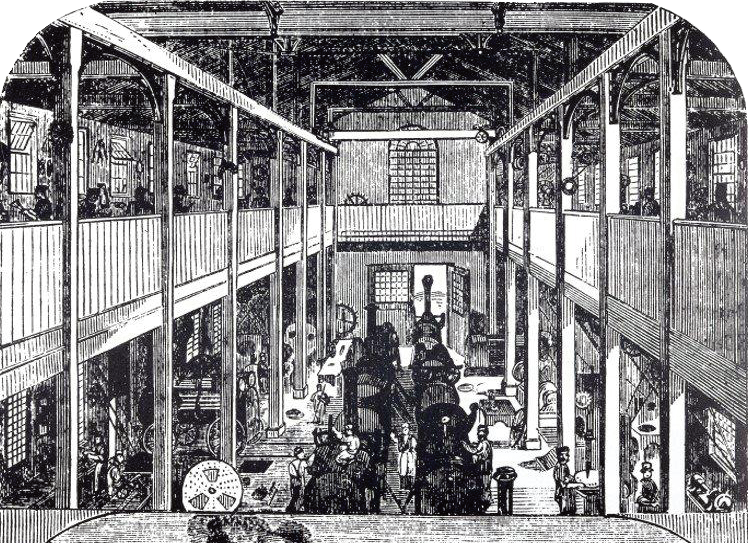
A print of 1865 shows the assembly of portable engines in the Long Shop

The Inspiration for the Long Shop

Garretts, along with similar manufacturers, submitted products to be displayed at ‘The Great Exhibition’ of 1851. There, Richard Garrett learned of practices being developed in America to increase manufacturing efficiency. It's believed that he was especially influenced by the ideas of Samuel Colt, the gun manufacturer. Colt deployed his workers so that small groups each of which completed a single assembly stage in the process of firearm manufacture. Each weapon passed from group to group until all the stages were complete.

Richard III recognized that this principle could be applied to the mass production of larger machinery. The portable steam engine was an ideal product but needed a dedicated building - building the Long Shop began in 1852

The Long Shop in Operation

Prepared boiler/firebox sections, mounted on wheels, entered the Long Shop from the western end and progressed through the building as components and sub-assemblies were added in each of the bays. The larger parts were made in the ground floor bays and the smaller ones manufactured in the upper gallery then lowered using the gantry crane. The completed portable engine would then leave by the east doors. This method allowed for several portable engines to be constructed simultaneously with a new wheeled boiler entering as a completed engine left the shop.

‘The Cathedral’

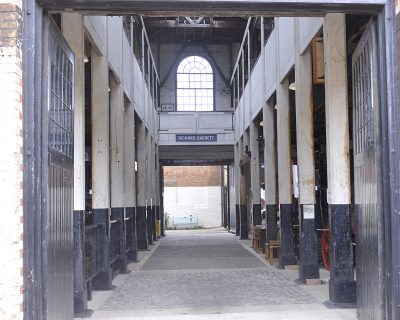
The Long Shop, was known as the cathedral by Garrett's workers. Like a cathedral, the Long Shop has a central nave and two side aisles. The nave and the aisles are separated by rows of columns. Above, there is a high gallery where the arches are topped by a track for the massive gantry crane. Just like a cathedral, too, the Long Shop runs East to West.

‘A fine and lofty building constructed in 1852, expressly for the manufacture of portable, fixed and traction engines’

From Bells Weekly Messenger, 1863

The Windows

The windows on the ends and north side of the Long Shop are large to give a good working light (the Long Shop was originally lit by gas). However, the south wall has only one small window. This is because it was attached to another building – the foundry.

The Block Floor

The floor of the central section of the Long Shop is made up of blocks of wood set on end. Many parts used in the construction portables were made of cast iron and a wooden floor reduced the risk of breakage. The end grain also absorbs spilt oil, making the surface less slippery.

Powering the
Long Shop

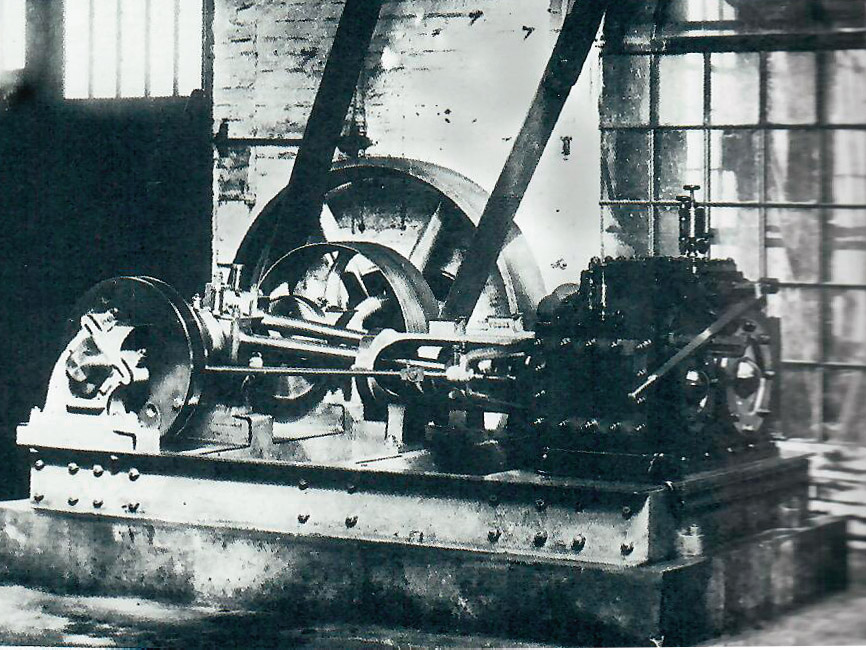
Running along the length of the Long Shop, just under the ceilings there ran line shafts. These were rotated by five powerful steam engines located outside the Long Shop. Pulleys at intervals along the line shaft were used to drive machinery below via long leather belts.

The Gantry Crane

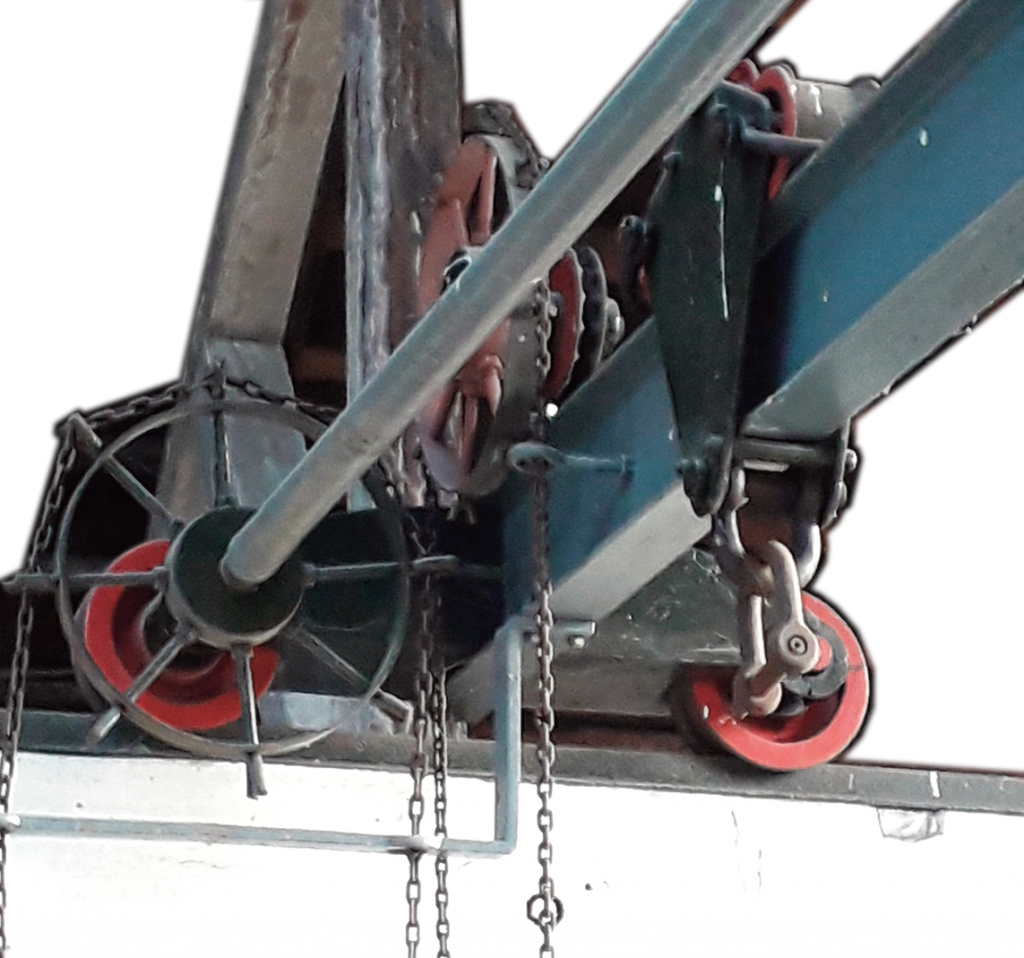
Look up to the top of the gallery. There you will see the gantry crane - there were two originally. It runs on tracks running the full length of the gallery and can be moved in each direction using chains. There are gates at each end of the gallery. If an item needed to be moved between the gallery and the ground floor, the crane would be moved to one end of the gallery and loaded. The load could then be deposited wherever it was needed with precision.

A section of lineshaft in the Long Shop

The steam engine that drove the lineshafting, situated at the east end of the Long Shop

Production outgrew the Long Shop and a range of new buildings supplemented its use in the 1860s. But the Long Shop remains a testament to Richard Garrett's talent for innovation in the 1850s.